I write these weeknotes mainly for myself, as a tool for reflection and an aide memoire, and share them openly for anyone who finds them useful.
This week was about benefits, planning and shared needs, and an unexpected dose of frontline NHS experience via A&E.
Benefits
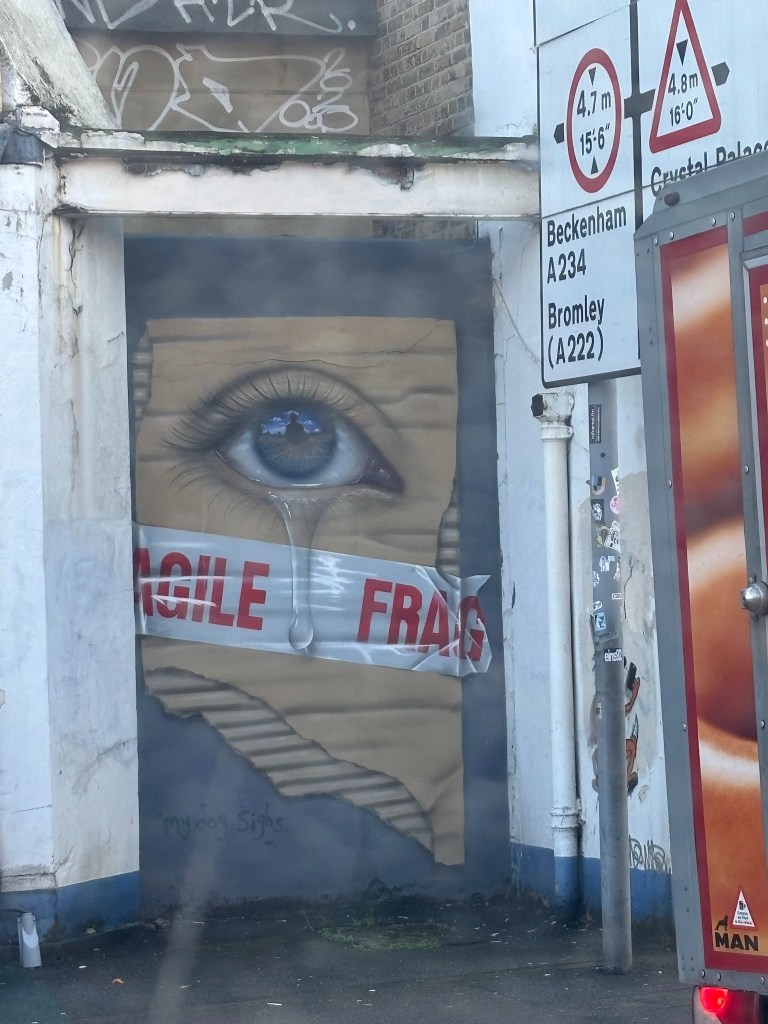
This week involved a lot of revisiting the benefits we expect to drive with our work in PPS and the confidence levels attached to them over a four-year period. Many of these benefits rest on assumptions layered on top of other assumptions. That tension sits awkwardly with agile practice, where learning and delivery evolve over time rather than following a fixed prediction. I saw some cool graffiti in my neighborhood, which had a very fitting play on Agile Fragile!
It is also genuinely hard, and sometimes actively unhelpful, to claim simple correlations in a complex system. Our services operate alongside many other determinants that influence health outcomes, directly and indirectly. Attributing change to one intervention risks false certainty. It is also genuinely hard, and sometimes actively unhelpful, to claim simple correlations in a complex system. Our services operate alongside many other determinants that influence health outcomes, directly and indirectly. Attributing change to one intervention risks false certainty. Dan Bower in Screening has written a great post on NHSE’s obsession on in-year benefits, which resonates with how misaligned short-term measurement can be with long-term strategic prioritisation. This will need further refinement over the next year.
This will need further refinement over the next year.
Spending time with people… remotely
On Wednesday we held our Q4 portfolio planning day with colleagues from product, delivery, tech leadership, and SLT. I had planned to be in Leeds but a fall the night before meant joining remotely. Disappointing not to be in the room, but the remote workshop worked well.
We shared our revised strategy and received thoughtful feedback. Personally, it was reassuring to see that the reframing is landing and making sense to teams. We also heard from the ‘Manage My Health’ team about their early thinking, including how it fits with the NHS App move to native code. This work feels genuinely important. The potential impact on how people engage with prevention, and with the NHS more broadly through the App, is significant.
We then reviewed each team’s OKRs. It was a constructive and honest space to reflect on the last quarter and align on what matters next. One clear learning was how differently teams still approach OKRs. That diversity is not inherently a problem, but some shared standards matter for alignment and external communication. It reinforced the need to keep investing in training and practice. As Julia Harrison, our new DD, put it simply: ‘you build practice by doing the work’.
Common needs across PPS
In the final session we looked at needs shared across the portfolio. My group focused on partnership building and engagement with local organisations.
We identified several unmet needs:
- Better understanding of local context, including different partner types, constraints, and incentives
- Faster delivery through meaningful, mutually beneficial partnerships
- Stronger mechanisms to capture and share learning as the portfolio grows
- Clearer articulation of what PPS is trying to do, for potential partners
- Better identification of shared system needs that PPS could address
There are early ideas for addressing this, including dedicated capability to support partnership-building across the portfolio. More to come on that.
Huge credit to Simon Pearson for organising and facilitating the day, keeping momentum high, and getting everyone to a strong place with their OKRs.
Twisted up
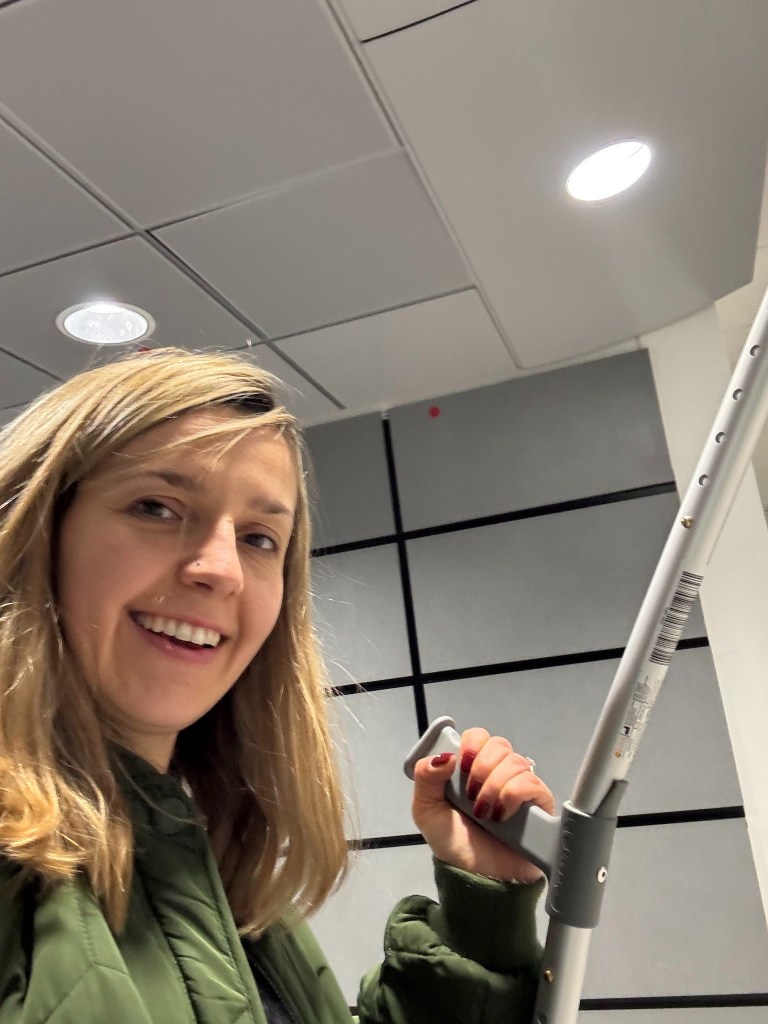
On Tuesday evening I badly twisted my ankle and ended up in A&E the next morning to rule out a fracture. Thankfully there wasn’t one. The experience itself was calm and efficient: under 90 minutes from arrival to discharge, including X-ray and consultation.
One thing that struck me, though, was the inefficiency of being issued free crutches costing around £20 that I don’t need (and didn’t need at the time and was protesting to take). It felt wasteful, even if minor in the scheme of things. A small example of how friction and excess can creep into even well-functioning parts of the system. If anyone knows what’s the most useful thing I can do with these crutches (I’m thinking donate somewhere?), let me know.
And that’s me, hobbling around on crutches.
What I am reading this week
This week I read three books, rated in order of my preference.
Small Things Like These by Claire Keegan covers a touching story of the Magdalene laundries and the horrible cruelty that the Catholic church inflicted on so many kids. This story impacted me deeply – as a mother, I can’t imagine the feeling of having your child taken away from you against your will.
Big Kiss, Bye-Bye by Claire-Louise Bennett explores past relationships – deep and fleeting, and how the self shapes and is shaped by those. It asks: “What does it mean to connect with another person? What impels us to touch someone, to be touched by them, to stay in touch? How do we let them go?” and I’ve been thinking about that a lot too.
In Convenience Store Woman by Sayaka Murata the main protagonist grapples with society’s expectations for her to conform. In the end she comes to peace with what she’s meant to do. Good for her!
 Irina Pencheva
Leave a comment