I write these weeknotes mainly for myself, as a tool for reflection and an aide memoire, and share them openly for anyone who finds them useful.
The first week of 2026 was busy and energising, with a site visit to a health check provision and an away day.
Field trip
We visited the Vital 5 provision in a shopping centre in Southwark Council to understand the service better, as we look to expand into componentised health assessments and digital tools to help people understand their health risks and what they can do to address them.
It is always valuable to see a service in person. This visit had the added bonus that I could measure my own health indicators and confirm the post-Christmas damage, including that I have somehow shrunk by 2 cm. Also – dry January couldn’t have come faster!
A service like Vital 5 feels ripe for digitisation. In this specific setting, data is entered into an Excel spreadsheet that does not feed into anything else – such as a GP record or even an individual profile.
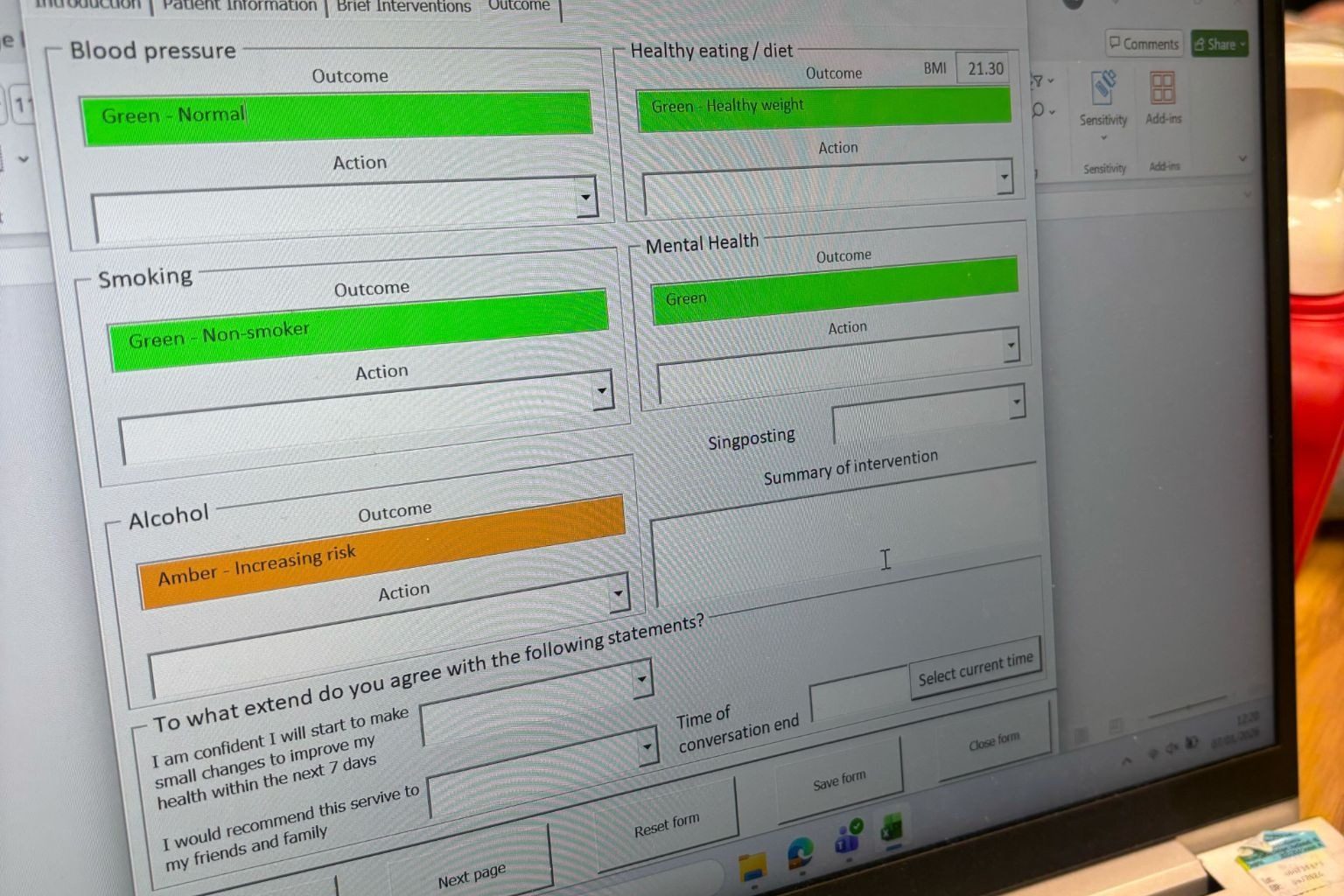
This is how the results from my Vital 5 check were processed – through an Excel macro.
The nurse delivering most of the Vital 5 checks spoke about her frustration at not knowing what happens to people after the check, or whether it leads to any meaningful change in their health.
What struck me most was the importance of the conversation itself. The human reassurance and trust built in that interaction would be hard to replicate in a purely digital channel. It is something we will need to think carefully about as we design future services.
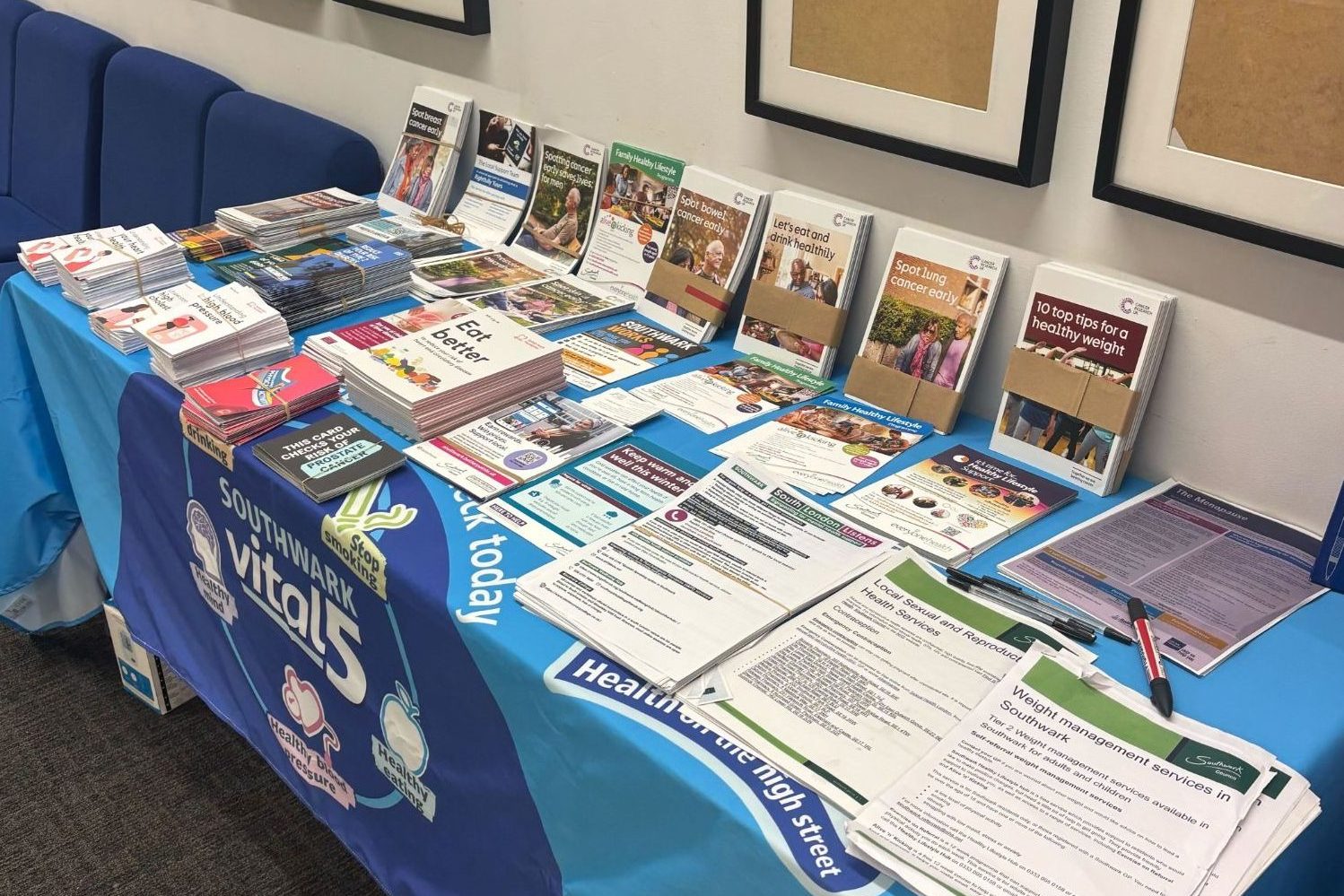
There’s also a lot of possible signposting to follow-on services but I thought most was fairly generic and often could be a bit overwhelming. Getting people to understand and find what’s right for them, and stick to behaviour changes is another area where we need to lean in.
The visit also reinforced the value of working in close partnership with local areas such as South East London Integrated Care System (ICS). Services like this exist because there is a clear local need, local ownership, and a willingness to make delivery work despite constraints. That partnership is critical not just for buy-in, but for speed. It helps us test and adapt services in real settings, reduce the risk of building the wrong thing, and ensure we are responding to genuine user needs rather than assumed ones.
Inviting challenge
On Thursday, a few of us spent the day with our new Deputy Director Julia Harrison refining our strategy as we move into the next phase of delivery for the Personalised Prevention Services portfolio.
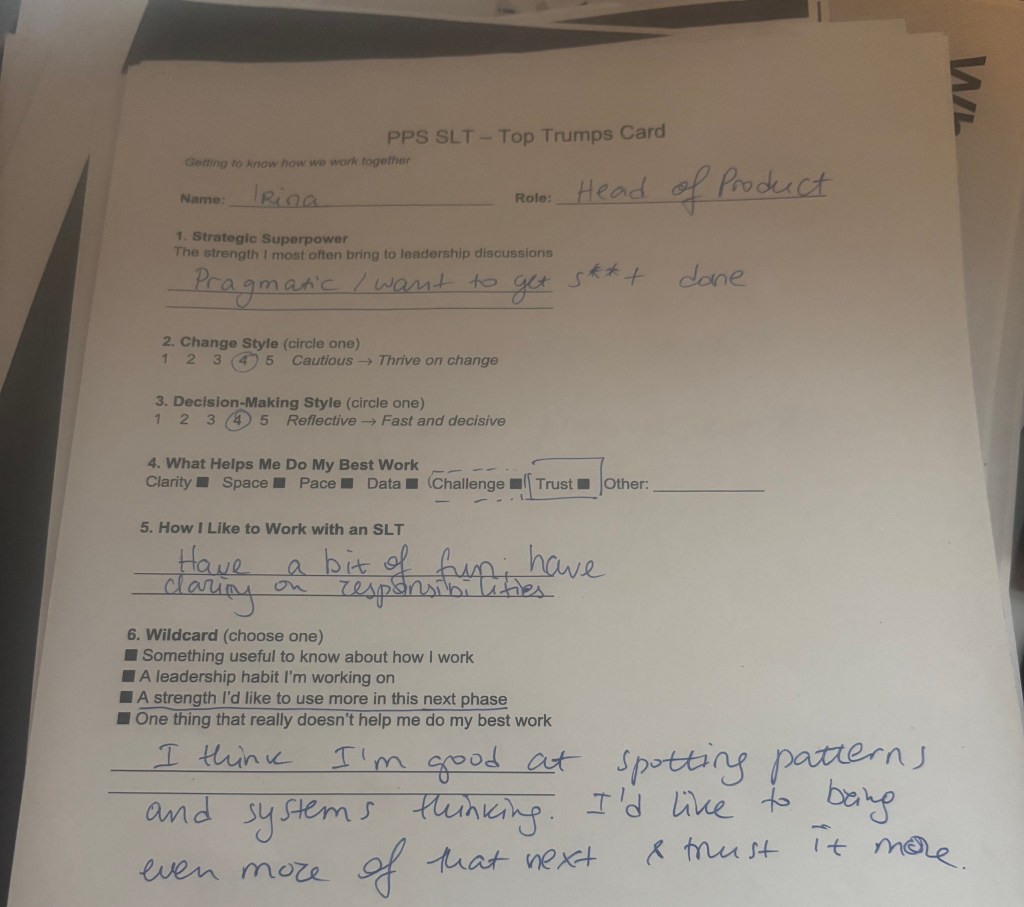
I facilitated the session and spent a lot of time designing a plan that would help us get the most value from the day. We started by sharing our top trumps and non-negotiables for how we work together, both day-to-day and as an SLT. Below is my response to how I like to work.
From there, we moved into a fast-paced and productive workshop. The revised strategy builds on a series of earlier formal and informal conversations with members of the PPS SLT, a structured review of policy changes and steers over the past year, and learning from the work our teams have done to test riskiest assumptions.
Ahead of the session, I also had several very helpful preparatory conversations with Julia and our Head of Delivery Naomi Murphy-King. We used these to challenge whether our outcomes still hold up and to surface some of the inherent tensions we are working within.
We tested our draft strategy against three questions:
- Clarity test: where could this still be interpreted in multiple ways?
- Tension test: where might this create friction with the wider DPSP, NHS England and stakeholders?
- Integrity test: where does this not align with what we have learned or how we actually work?
I also tried to be tight on time and steer discussions that may lead to rabbit holes.
I will share more on the actual strategy and where we land once we have stress-tested this with our teams and stakeholders.
At the end of the day we also paid an emotional musical tribute to Emily Houghton (former DD) and Ralph Hawkins (former Service Design Lead), as they move to the ‘Prevention in the App’ area. #PPS Forever
What I am reading this week
My challenge for 2026 is to read 52 books, roughly one a week. I asked ChatGPT to help me build a reading plan based on what I have read before and what I want to explore next.
In the first two weeks of the year, I have read Eurotrash by Christian Kracht, and Последният ловец на делфини (The Last Dolphin Hunter) by Zahari Karabashliev. Both follow adult men tracing and coming to terms with their messy family histories but each book is written in a very different style. Eurotrash is witty, ironic, and absurd. The Last Dolphin Hunter is gentle and romantic, and for me carries a strong sense of nostalgia as a Bulgarian living abroad.
 Irina Pencheva
Leave a comment